 blog.gov.je
Air source heat pumps are transforming the way Jersey heats its homes. But despite their popularity, older misconceptions still put people off making the switch. We’re here to set the record straight with the truth behind the most common myths.
❌ MYTH 1: “Air source heat pumps are expensive to run”
✅ The Real Heat: A heat pump can cut your annual heating bills
A properly designed heat pump can reduce running costs compared to gas or oil. With efficiencies of 300 to 400%, heat pumps produce at least three units of heat for every unit of electricity – far more than a 90%-efficient A-rated boiler.
And because Jersey’s electricity is cleaner and cheaper than in the UK, heat pumps are one of the most sustainable, cost-effective systems for long-term home heating.
“We have had no regrets following a year’s use. Our running costs are hugely reduced, the house is warm and feels much cleaner without the oil boiler and storage tank.”
– Wendy, St John, four-bed 1970s bungalow
Replacing a boiler is an unavoidable cost. Switching to a heat pump is an investment.
The Low Carbon Heating Incentive makes the upgrade even easier by removing thousands from the upfront cost.
“Without the government grant, replacing the tank or moving to another heating source would have been a difficult choice as costs would have played a significant part in the mix.”
– Sam, St Saviour, three-bed semi-detached 1930s property
A regularly serviced heat pump can last 15+ years, delivering consistent warmth and long-term savings.
❌ MYTH 2: “Heat pumps don’t work in older or poorly insulated homes”
✅ The Real Heat: Good system design matters more than perfect insulation
If your current oil or gas system heats your home today, a well-designed heat pump can too. The heat pump is providing the same amount of heat as the previous system. The system design will determine the amount of heat needed during the colder days to keep ambient temperature at the right level. This heat input will be the same regardless of the fuel type or heat source.
The biggest factor is system design, including radiator size and how the system is configured to your home.
“We’re spending less than £1 a day. It’s less than half of what we used to pay”
– Nick, Grouville, three-bed detached listed granite home
Heat pumps typically deliver three units of heat per unit of electricity, while even an A-rated boiler gives less than one unit of heat per unit of fuel.
Insulation helps to reduce the heating demand for any property, and loft or cavity wall insulation must be completed if recommended on your Energy Performance Certificate (EPC) when applying for the grant, but there is no minimum EPC requirement to qualify for funding.
❌ MYTH 3: “The incentive doesn’t cover everything you need”
✅ The Real Heat: The grant covers all major heating system costs – and more
The Low Carbon Heating Incentive can match fund all the big things like the heat pump system and labour, but it can also go towards:
- ✔ Pipework
- ✔ New radiators where required
- ✔ Eligible insulation improvements (new front door, draft excluders etc)
Costs associated with aesthetic items such as redecorating and other required groundworks are not included.
Only “easy to install” loft insulation or cavity wall insulation recommendations must be completed as part of the project.
❌ MYTH 4: “Heat pumps don’t heat the house enough”
✅ The Real Heat: Heat pumps deliver steady, comfortable warmth all day long
A correctly sized heat pump can keep any home warm – including large or older properties. Instead of quick blasts of hot air like a boiler, heat pumps run systems at lower temperatures which results in constant warmth. Radiators won’t necessarily be hot to the touch, and you won’t get boilers kicking in and out all the time to deal with temperature drop-offs.
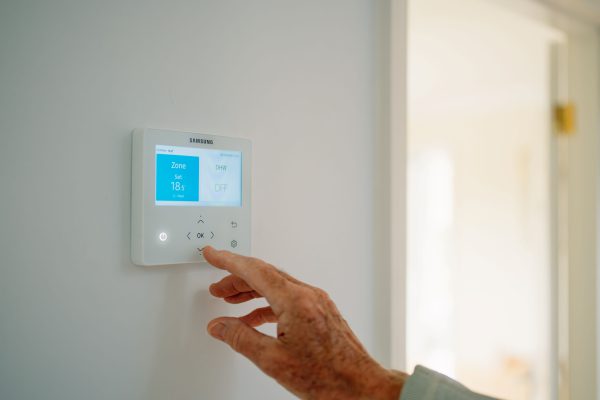
“The heat pump was installed by 1st Call whilst I was on holiday and I came home to a warm and cosy house, something I had been concerned about when I first thought about switching heating solution”
– Nadia, St Helier, Detached 1999 home
Heat pumps produce more heat than the electricity they consume, making them far more efficient than traditional heating systems. And because they run continuously at low levels, you avoid the cold-to-hot-to-cold cycle familiar with boilers.
❌ MYTH 5: “Heat pumps are huge and take up too much space.”
✅ The Real Heat: They’re compact – and often free up space
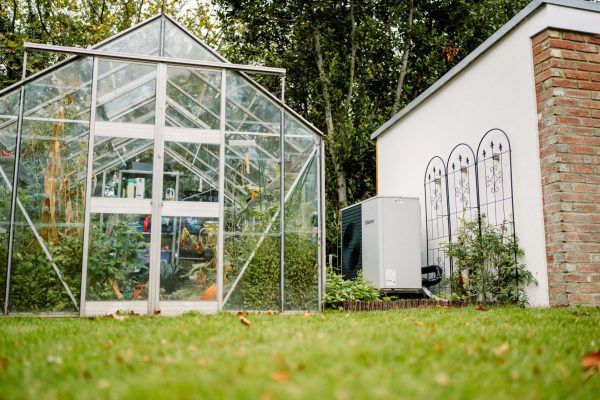
A standard air source heat pump is about the size of a double base kitchen unit and can be conveniently sited almost anywhere on the outside of the property.
For homeowners switching from oil, you’ll likely gain space outside your home once the oil tank has been removed.
“We’ve benefitted on space. We’ve got space back where the immersion tank was, the cold-water tank in the loft and the oil tank”
– Paul, St Brelade, 1970s detached home
Heat pumps are quiet, compact and designed to sit neatly against an exterior wall.
Explore the Low Carbon Heating Incentive and discover how much of your upgrade could be covered.