 blog.gov.je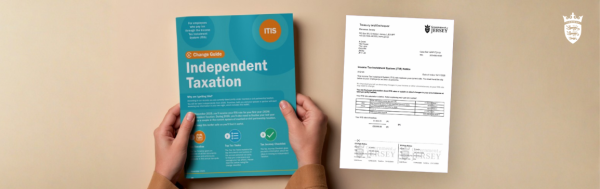
From 1 January 2026, Jersey will complete one of the most significant reforms to its tax system in nearly a century: the move for remaining married couples and civil partners to Independent Taxation. If you’re affected, you’ll have received a Change Guide in November with a checklist to highlight what will be different every step of the way.
The first step for many people, is receiving their first ITIS rate for next year, based just on their own income. We’ve been monitoring questions on this, and other themes from customers since the Change Guides and ITIS rates have been sent out. If you are moving to Independent Taxation in 2026, you may find the following a helpful read:
Why are our ITIS rates so different?
There are a few possible reasons:
- Your rate is now calculated solely on your own income. If there’s a big difference between your income and your partner’s, your rate could change significantly. There’s a diagram in your Change guide that shows how this works.
- Your circumstances have changed – perhaps a salary increase, new job, or additional income since you last submitted your return, and you’ve not told us yet.
- Child allowances are split equally between partners in your 2026 ITIS rates. You can change the % of the allowance each of you have if you wish. You may find you pay less tax overall as a couple by doing this. Experiment with different splits using gov.je/taxcalculator.
- 2025 is the last tax year you can claim Mortgage Interest Relief (£1500), so it’s not in the calculation we have used to estimate your 2026 tax and ITIS rate.
- You are only entitled to compensatory allowance if both you and your partner are Jersey resident. If not, it will not have been included in your tax estimate and ITIS rate.
Use the tax enquiry form at gov.je/taxrequest to update us if your circumstances or income have changed, so we can update your rate.
How do I know if my ITIS rate is right?
Read the “Understanding your ITIS rate” guide, enclosed with your notice. There is also a new video walkthrough which is proving very popular with over 15,000 views just through Facebook. Go to gov.je/mytaxrate to watch it and see the five key things to check.
I’m confused as the guide says there is joint filing, can we still be taxed together?
No, ‘joint’ only applies to the form you put your information in. This is not joint taxation. It’s the same as having two separate returns submitted together. Forms just collect and send us all the information we need to assess the tax you should pay. If you file jointly, once the form arrives with us, the information in it will be split out, put onto your two separate accounts, then used to complete your own assessment. Your tax will always be calculated just on your own income and circumstances. You will always have your own allowances and deductions, receive your own assessment, and pay your own bill.
The first time you’ll file an Independent Taxation form, joint if you wish, is in 2027, once your first year being independently taxed, 2026, is complete. Only couples married before 2022 will have the joint filing option.
Why does everyone have to move to Independent Taxation?
The tax system, at its core had not changed since 1928. Tax law did, and still does support social beliefs, norms and laws from 97 years ago. In the present day, this tax law is based on assumptions about social structure that are very far from true.
It enables unacceptable inequality and discrimination between husband and wife, older and younger civil partners, and between unmarried and married couples.
Ultimately, the biggest driver to transition to Independent Taxation is to remove the discrimination in the tax system. If we are perpetuating the difference between couples who are married and those who aren’t then we will not have achieved this primary aim.
There will also be administrative advantages to taxing everyone in the same way, reducing costs, but more crucially increasing the capacity for Revenue Jersey to do more: offering better and targeted customer service for those groups who need it and providing new services faster.
The tax calculator says we’re going to be paying more tax so I don’t want to move
Any married couples who would pay more tax in Independent Taxation will receive the compensatory allowance. It will allow them to make the transition to full Independent Taxation over a number of years, with a gradual change in tax paid, rather than overnight.
It’s available to affected couples married or in civil partnerships before 1 January 2022. The allowance has been included automatically in ITIS rates for 2026 and will gradually reduce over time as personal allowances increase. The tax calculator is currently being updated and should show this from next year.
Is it really fair if some couples will have to pay more in the long run?
In short, there are currently many married couples, who receive up to £9,500 more in tax allowances than their co-habiting counterparts. This inequality on grounds of marital status has existed for decades, and is clearly unfair.
Independent taxation removes this discrimination. It was approved by the States Assembly because it recognised it can no longer be allowed to continue. The reform will treat couples equally regardless of marital status. It was shaped by public consultation, which showed strong support for there being one set of rules for everyone.
Essentials recap: Review your ITIS rate now, watch the video guide, let us know about any changes. Then give it to your employer when it’s right.